How to Wear a Midi Dress When You’re Petite
The midi is the trickiest length in the closet. Too long and it reads frumpy, too short and it is not a midi at all, and on a 5-foot-4 frame the margin between the two is about two inches.
Learning how to wear a midi dress petite enough to fit off the rack comes down to five decisions: where the hem lands, how the waist gets defined, what shoes finish the leg line, whether the skirt needs a slit, and how big the print runs. Get those right and the midi becomes the most useful dress you own.
I collected 20 real outfits and turned each one into a rule you can steal for How to Wear a Midi Dress When You’re Petite. Every entry shows the rule on a real body, in a real setting, with the styling detail that makes it work for shorter legs.
Skim for the rules you need, or read straight through. Either way, your next midi will fit like it was cut for you.
Here are the 20 rules, each demonstrated on a real outfit.
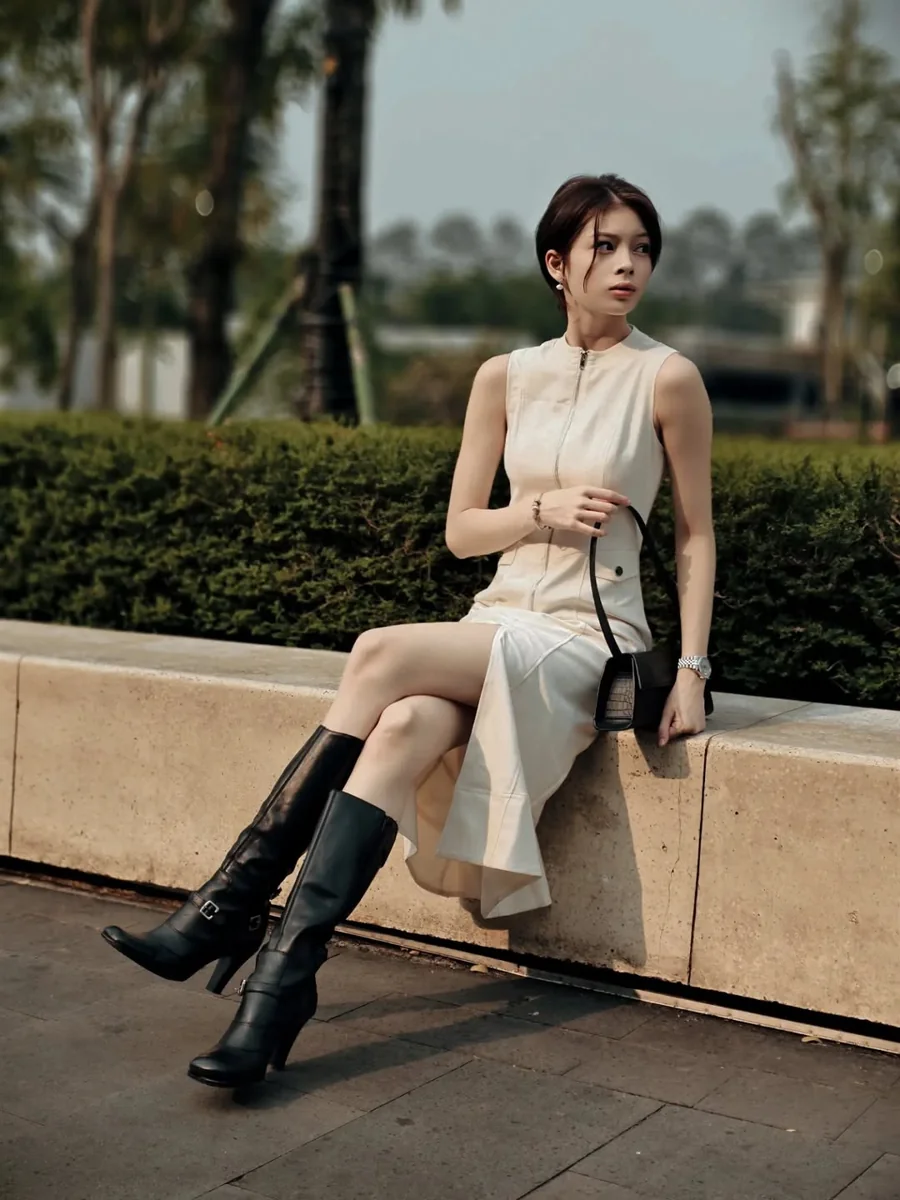
1. A Zip-Front Midi Dress and the Petite Boot Rule
Rule one: when you wear boots with a midi, the hem must clear the boot tops. A visible gap of leg between boot and hem is what keeps the outfit from reading as one heavy block.
This cream sleeveless midi with a front zip and mock neck sits opposite black knee-high heeled boots, and the contrast is the point. The light dress, the dark boots, and that strip of leg in between keep each piece distinct.
QUICK TIP
If your midi covers your boot tops, the boots disappear and your legs look shorter. Aim for at least a few inches of visible leg, or switch to ankle boots.
2. The One-Color Column in Black
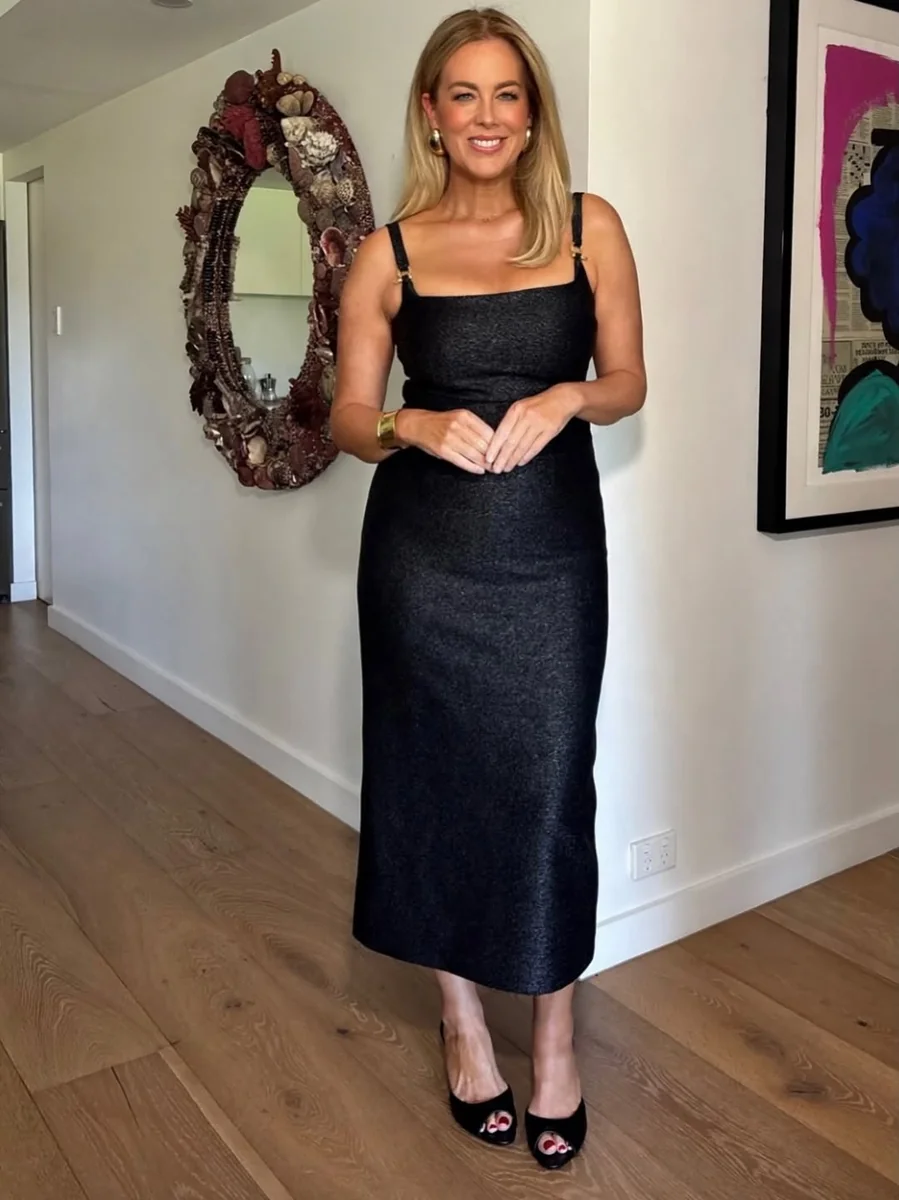
Black is the easiest midi lesson there is. This sleeveless square-neck midi runs one unbroken column from shoulder to below the knee, and black peep-toe heels extend it to the ground.
Two things make it work for a shorter frame. The fitted cut defines the waist without a belt, and the square neckline opens the chest so the top of the dress never feels heavy. One color, one line, no interruptions.
WHY THIS WORKS
A single dark column from shoulder to shoe reads as one long line, the fastest way to add visual height.
3. Print Scale: Keep Motifs Smaller Than Your Fist
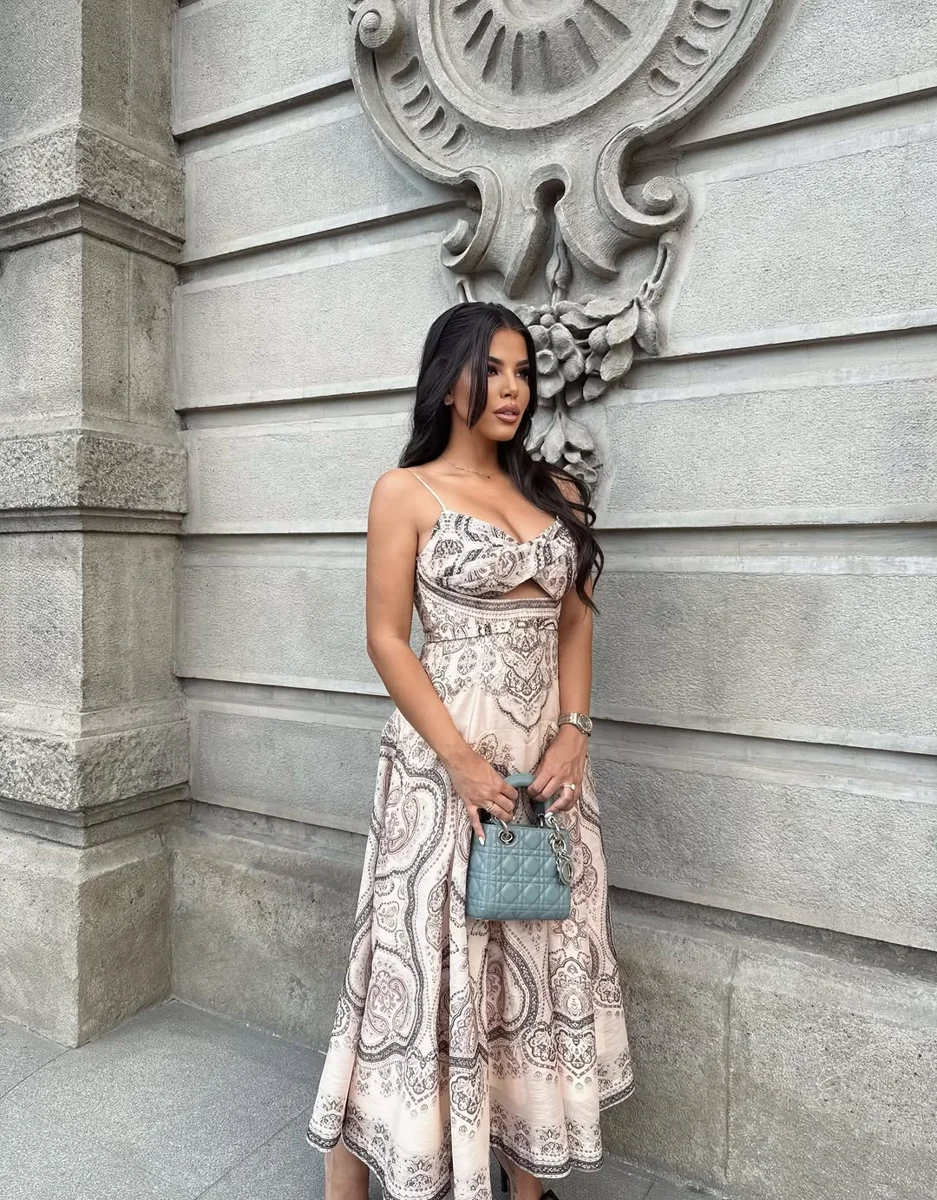
Prints shrink or stretch you depending on their scale. This sleeveless midi carries a paisley print in cream and gray, and the motifs stay modest in size, which keeps them in proportion to a smaller frame.
The twist front with its small cutout marks the waist without a belt, and a quilted blue bag adds one controlled pop of color. Big bold prints would fight the petite frame. These do not.
4. The Fit-and-Flare Formula for a Defined Waist
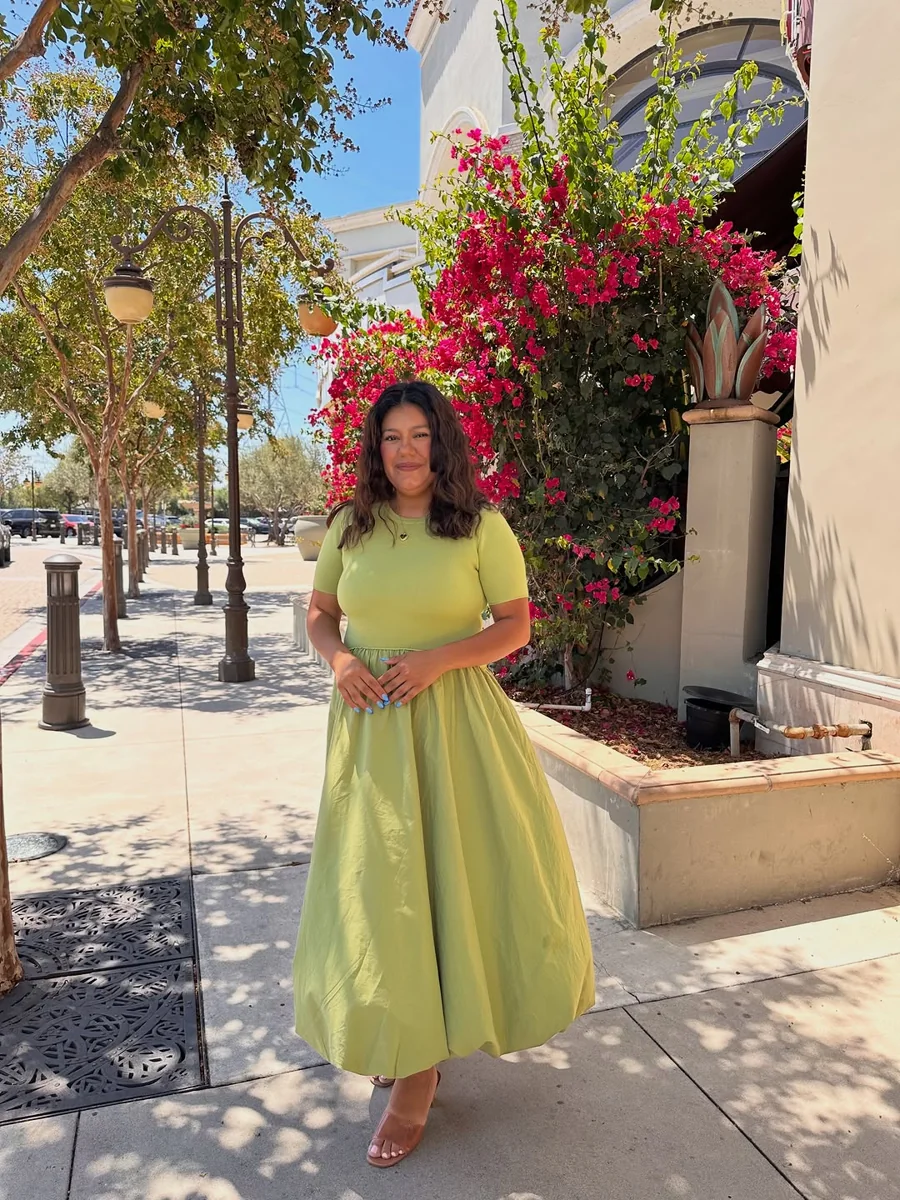
Some silhouettes do the petite work automatically. This lime green midi pairs a fitted short-sleeve bodice with a full skirt, and the waist seam between them does all the defining.
That seam is the whole rule. On a midi, a clear waistline splits the dress into a short top half and a longer bottom half, which is exactly the ratio that flatters shorter legs. The below-knee hem keeps it daytime-easy.
5. Vertical Seams: the Quiet Elongating Trick
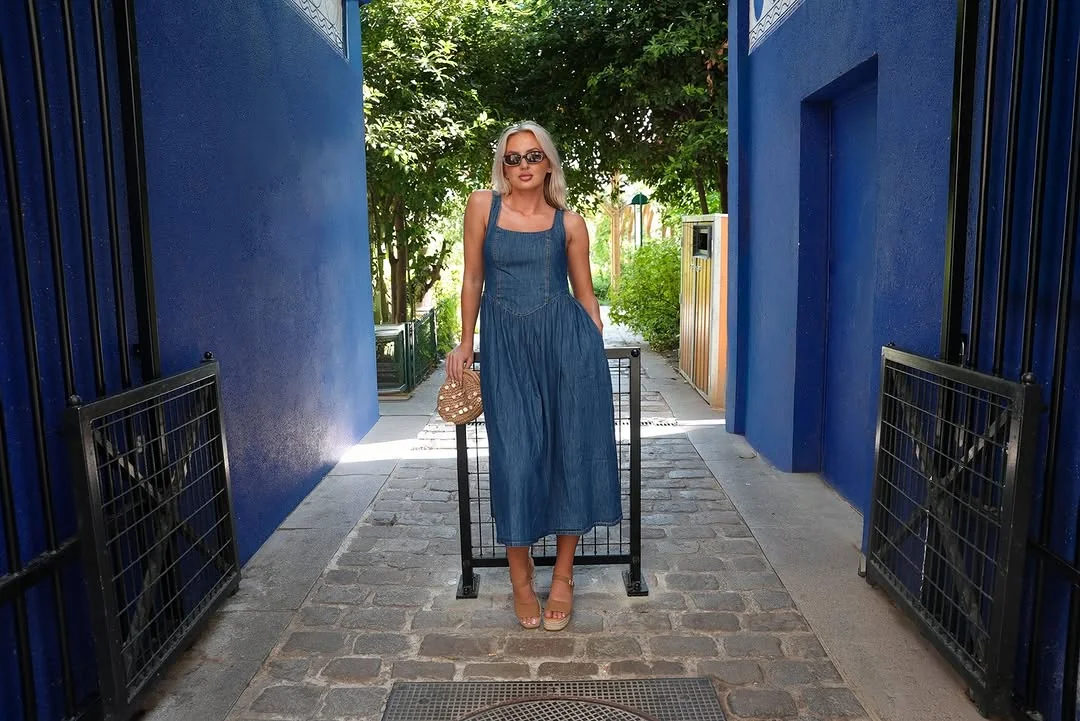
Look past the denim and find the seams. This square-neck midi is cut with long vertical princess seams that run from bust to hem, and each one draws the eye up and down.
Vertical seaming is the quietest elongating trick in the book. No belt, no slit, no heel strategy required. Paired with wedge sandals and a woven bag, the whole look stays casual while the seams do the lengthening.
Choose seaming that runs the full length of the dress, not just the bodice.
Keep the neckline open, square or V, so the top stays light.
Finish with wedges for daytime height that still walks well.
6. The Drawstring Waist: Adjustable for Real Bodies
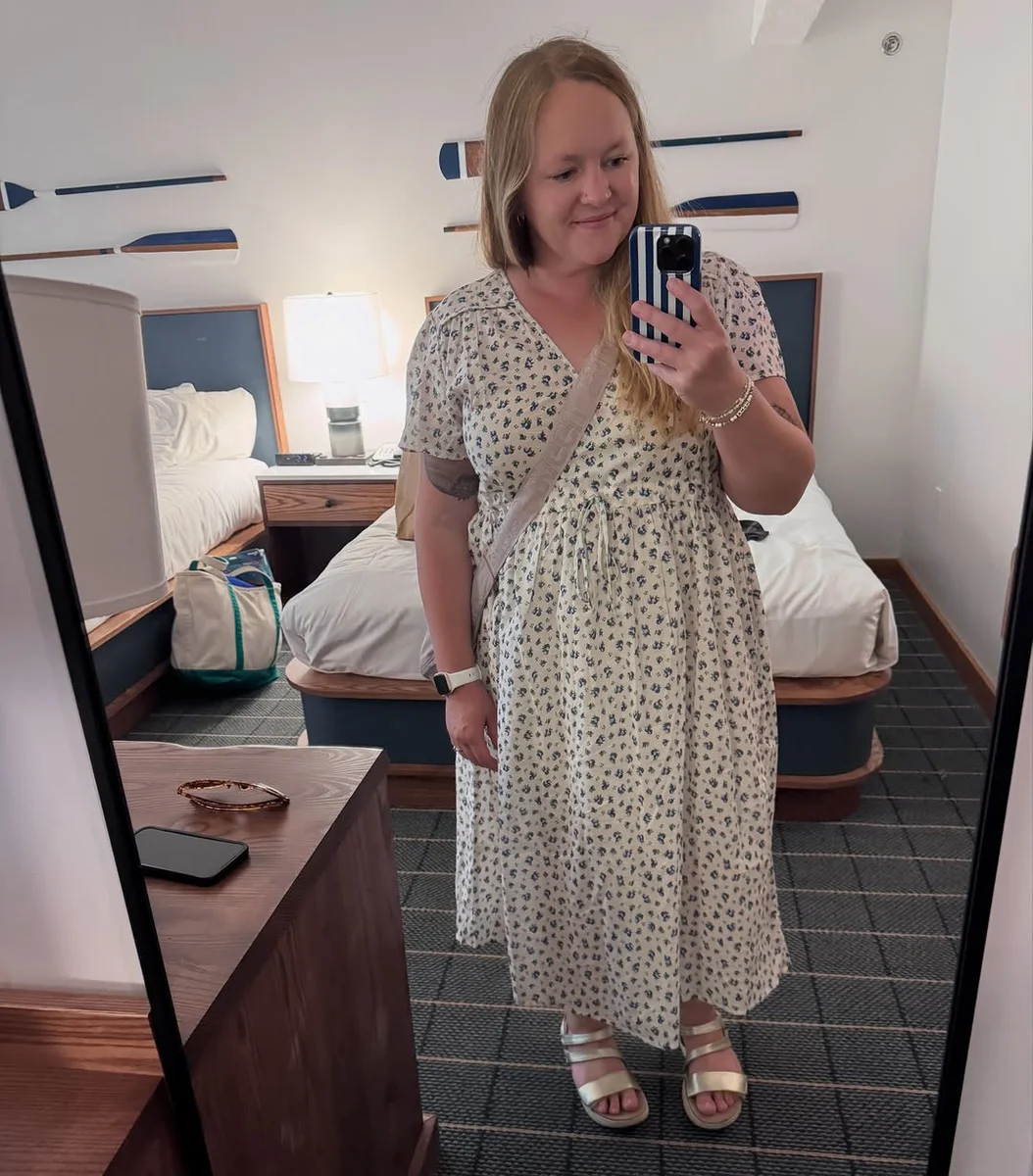
A drawstring waist is a petite cheat code. This cream ditsy-floral midi lets you pull the waist exactly where your waist actually is, instead of hoping the designer’s waist matches yours.
The small-scale floral print stays in proportion, the V-neckline opens the neck, and gold slide sandals keep the bottom light. Adjustable beats tailored when the dress comes off the rack.
Cinch the drawstring to your natural waist and tie it in front.
Pair with flat metallic sandals that blend with your skin.
Wearing it loose so the waist disappears entirely.
A heavy crossbody bag that cuts the dress in half.
7. Bright Monochrome on a Fitted Midi
Yellow is not a shy choice, and that is why the cut stays simple. This fitted spaghetti-strap midi runs one shade from the draped neckline to the below-knee hem, with no print and no belt to interrupt it.
On a bodycon midi, fit is the waist definition. The fabric skims and the neckline drapes, so the eye gets shape without hardware. Iridescent strappy heels nearly disappear, which hands the leg line back to you.
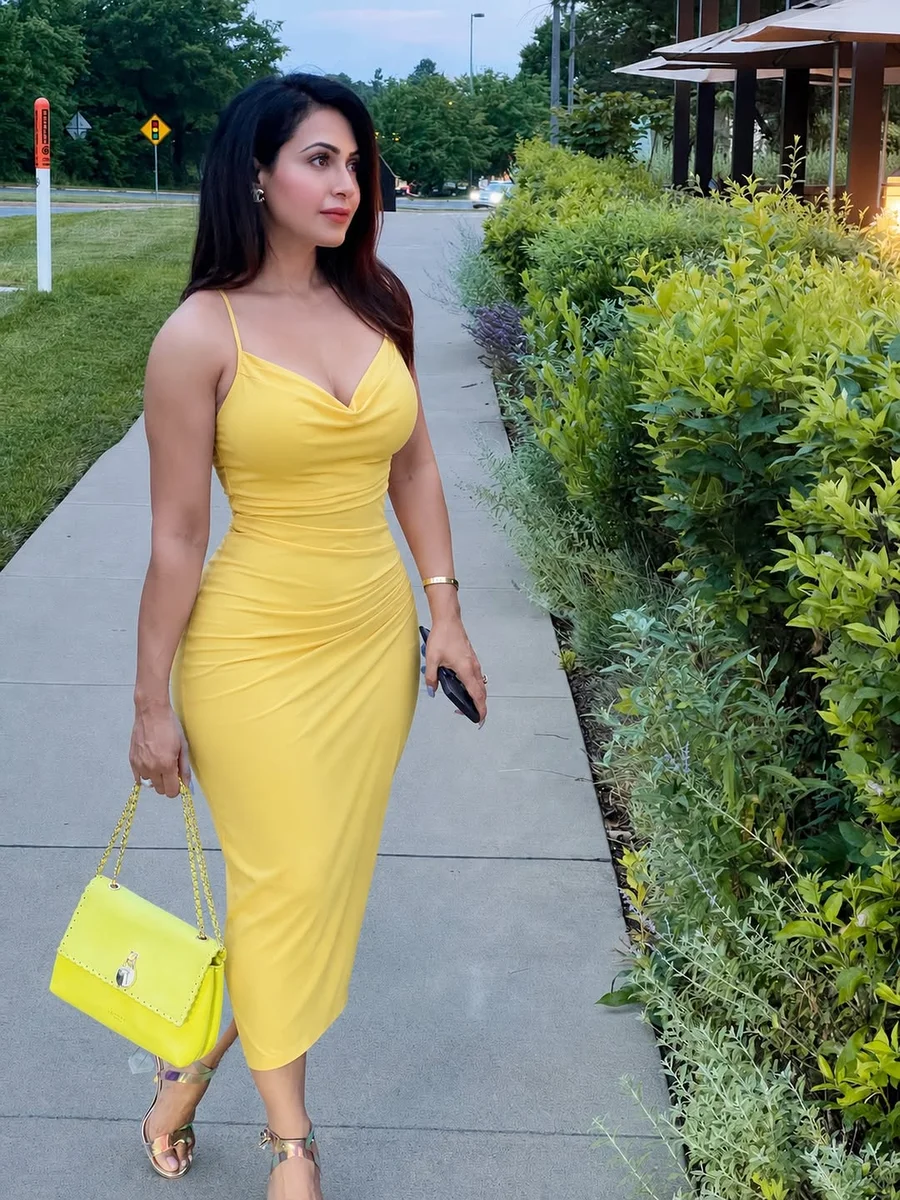
| Fitted midi win | Fitted midi risk |
|---|---|
| One bold color keeps the eye moving down. | Color-blocking cuts the body into short pieces. |
| A draped neckline adds shape up top. | A high plain neckline can read boxy. |
8. A Twist Detail That Builds the Waist In
Can a midi define your waist with no belt and no seam? Yes, with a twist. This black V-neck midi gathers the bodice into a knot at the front, and that knot sits exactly where the waist should be.
The twist pulls fabric in and creates the waistline the dress would otherwise lack. White ankle-strap sandals lighten the bottom of an all-black look, and the short sleeves keep the top balanced.
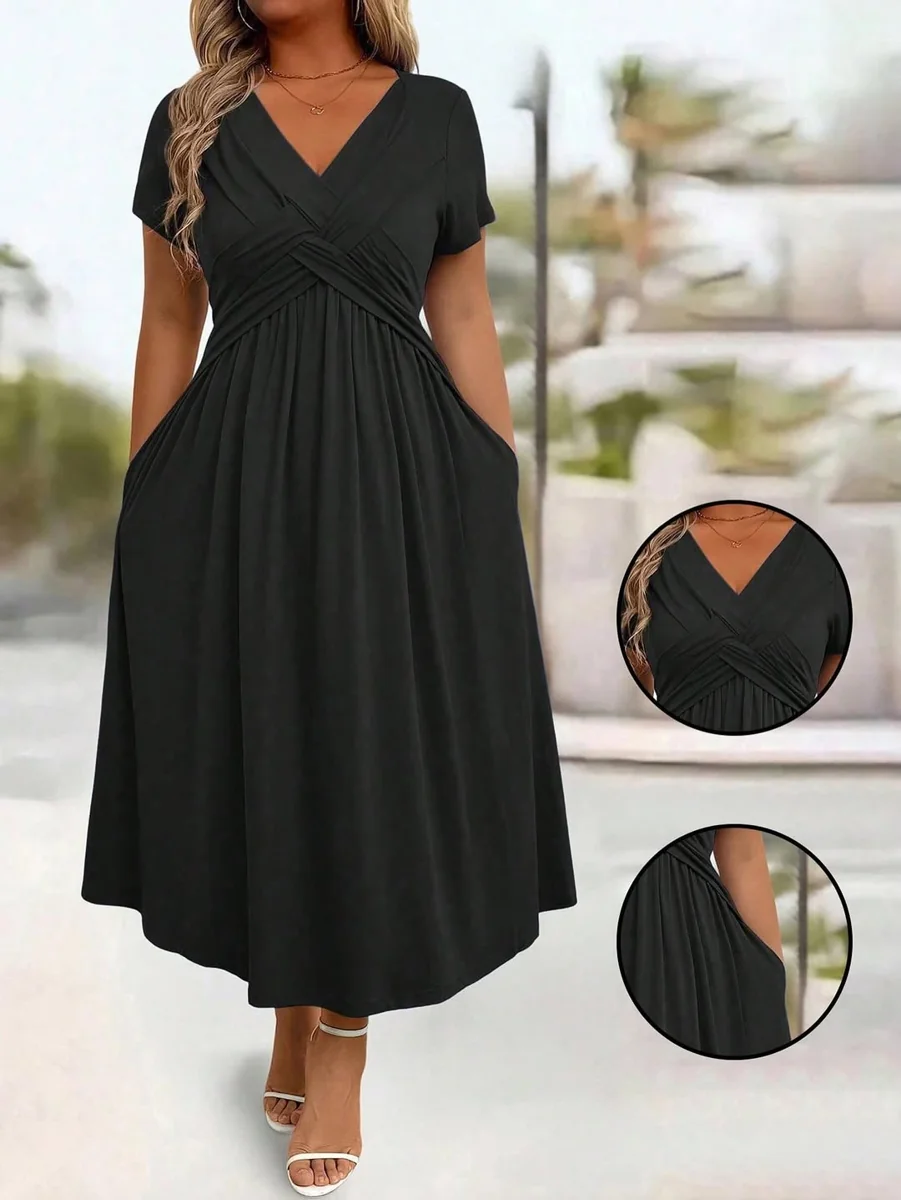
A straight black midi with no waist detail hangs like a column and hides your shape.
One twist or knot at the front builds a waistline into the dress, no belt needed.
9. A Cutout as a Waist Marker
Here the waist gets marked by subtraction. This purple halter midi carries a small circular cutout right at the waist, and that flash of skin does the defining.
Two cautions travel with this one. The white leaf print runs medium-large, so it needs the cutout and the white heels to keep the look from overwhelming a smaller frame. High-contrast prints demand a strong waist anchor, and this dress has one.
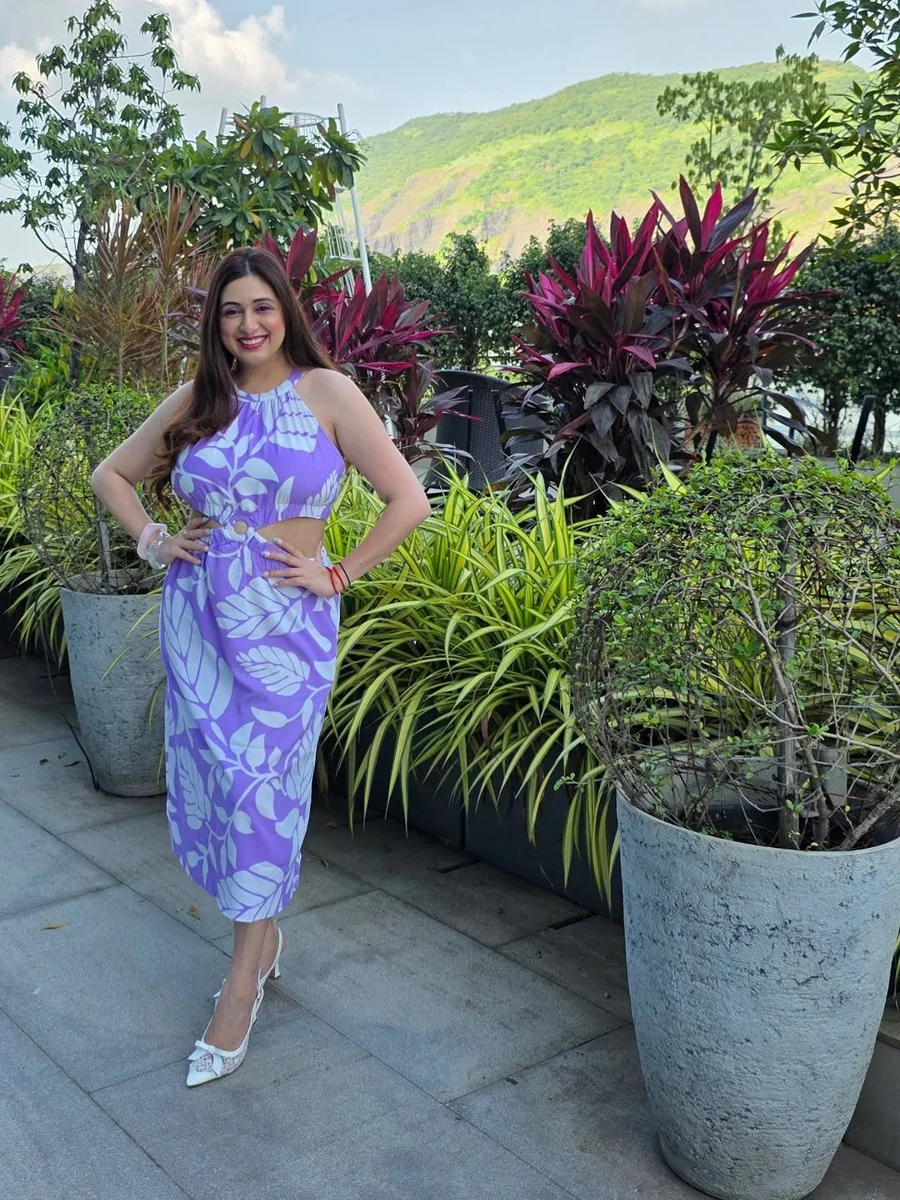
- ▸Keep cutouts small and centered at the waist, never sprawling.
- ▸Match the print’s contrast to your frame: bolder print, stronger waist.
- ▸White or nude heels keep a colorful midi feeling light.
10. Corset Structure for a Built-In Waist
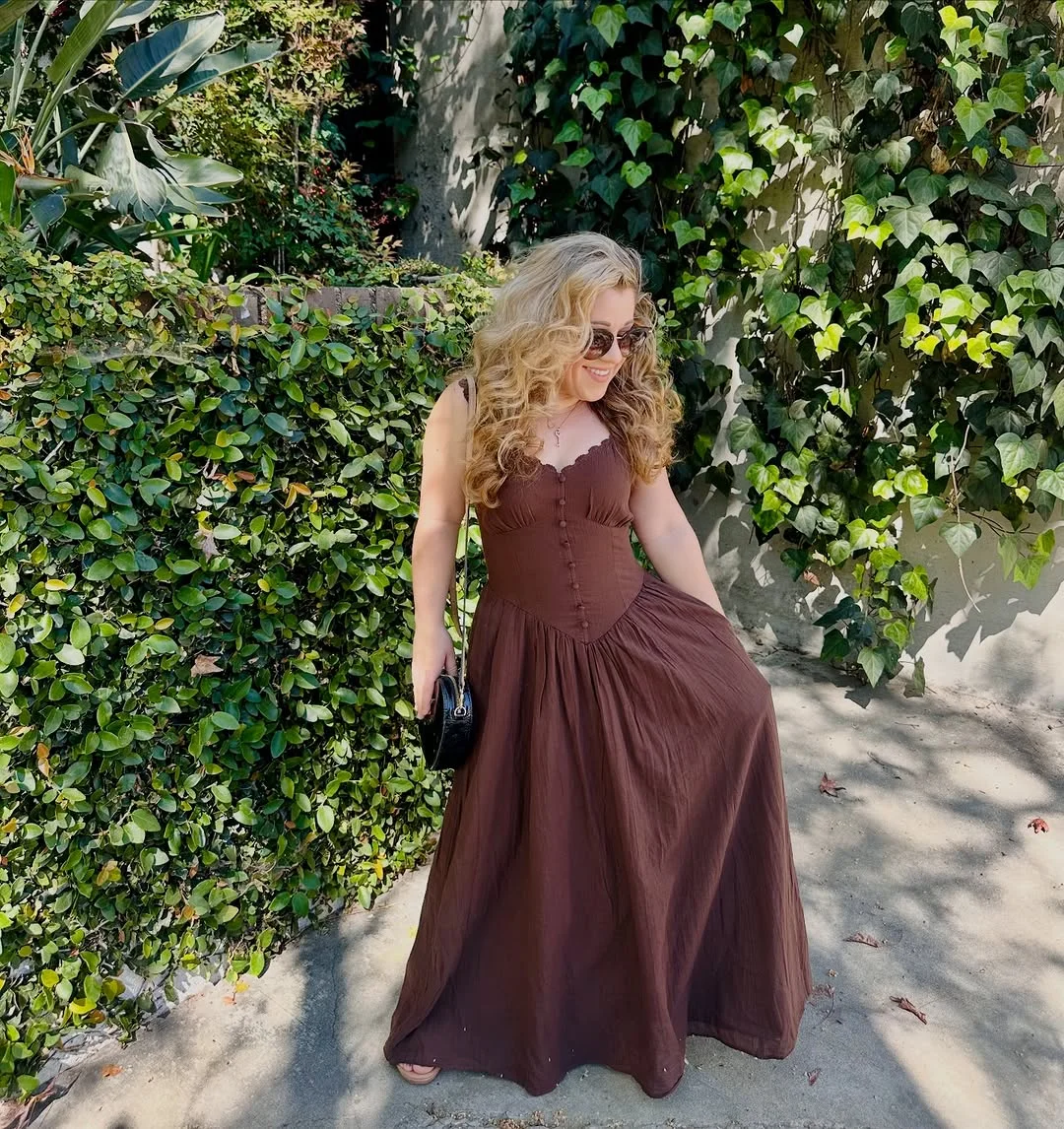
Boning is the most honest waist definition there is. This chocolate-brown midi builds a corset-style bodice with a button front, so the waist is engineered in, not hoped for.
The full skirt balances the structured top, and the hem grazes the ankle, which is the longest a midi should go. At that length the shoes must stay visible, so strappy or open-toe styles beat anything that hides under the hem.
11. Small Dots, Big Lesson on Print Scale
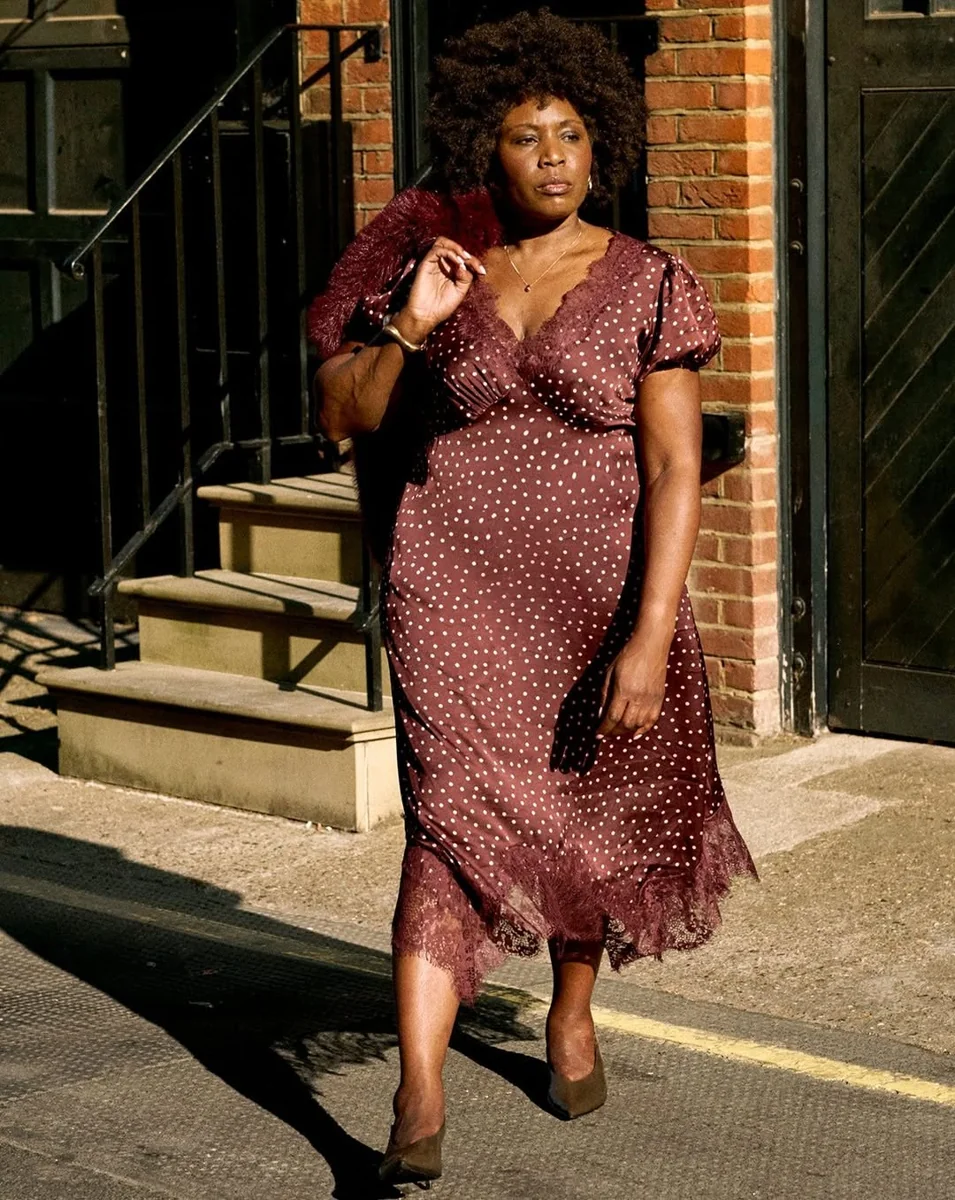
Dots are the friendliest print for petites because they stay small by nature. This burgundy midi scatters tiny white polka dots across a V-neck bodice with short puff sleeves, and the scale never fights the frame.
The lace trim at the neckline and hem adds texture without bulk, and brown pointed heels match the dress’s depth. When a print’s motifs stay small, the whole dress stays in proportion.
GOOD TO KNOW
A quick print test: hold your fist against the fabric. If the motifs are bigger than your fist, the print will likely wear you instead of the other way around.
12. Flats Can Work When the Hem Shows Ankle
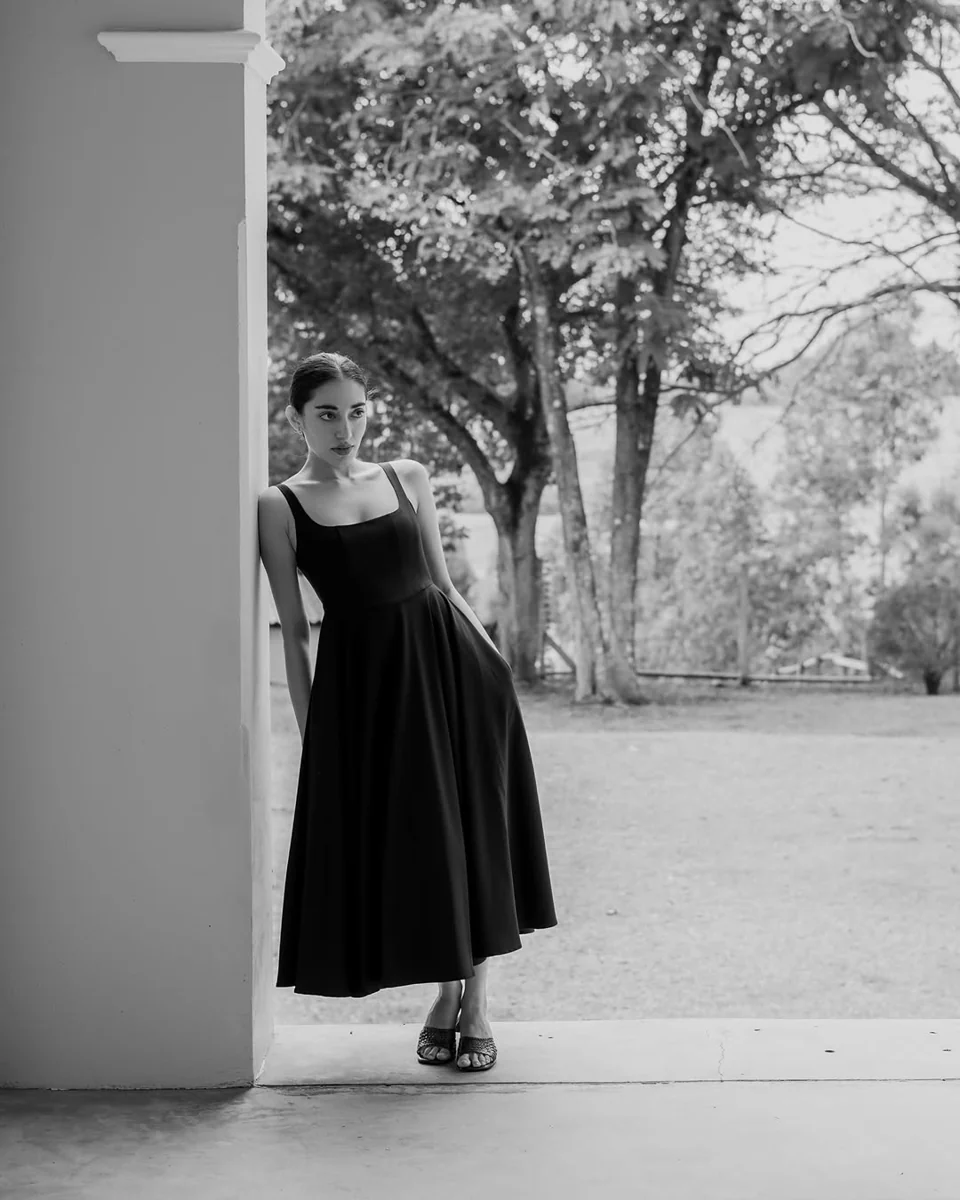
You do not always need heels with a midi. This dark fit-and-flare midi, shown in black and white, pairs with flat strappy sandals, and the trick is all in the hem.
The skirt ends above the ankle with a clean waist seam and an open square neckline, so plenty of skin shows at the bottom and top. Flats work when the dress gives the leg room to read long. For occasion versions of this shape, see wedding guest dresses for petite women.
WHY THIS WORKS
Skin at the ankle plus skin at the neckline gives the leg line room, so flats stop costing you height.
13. Rescuing a Relaxed Midi With a Slit
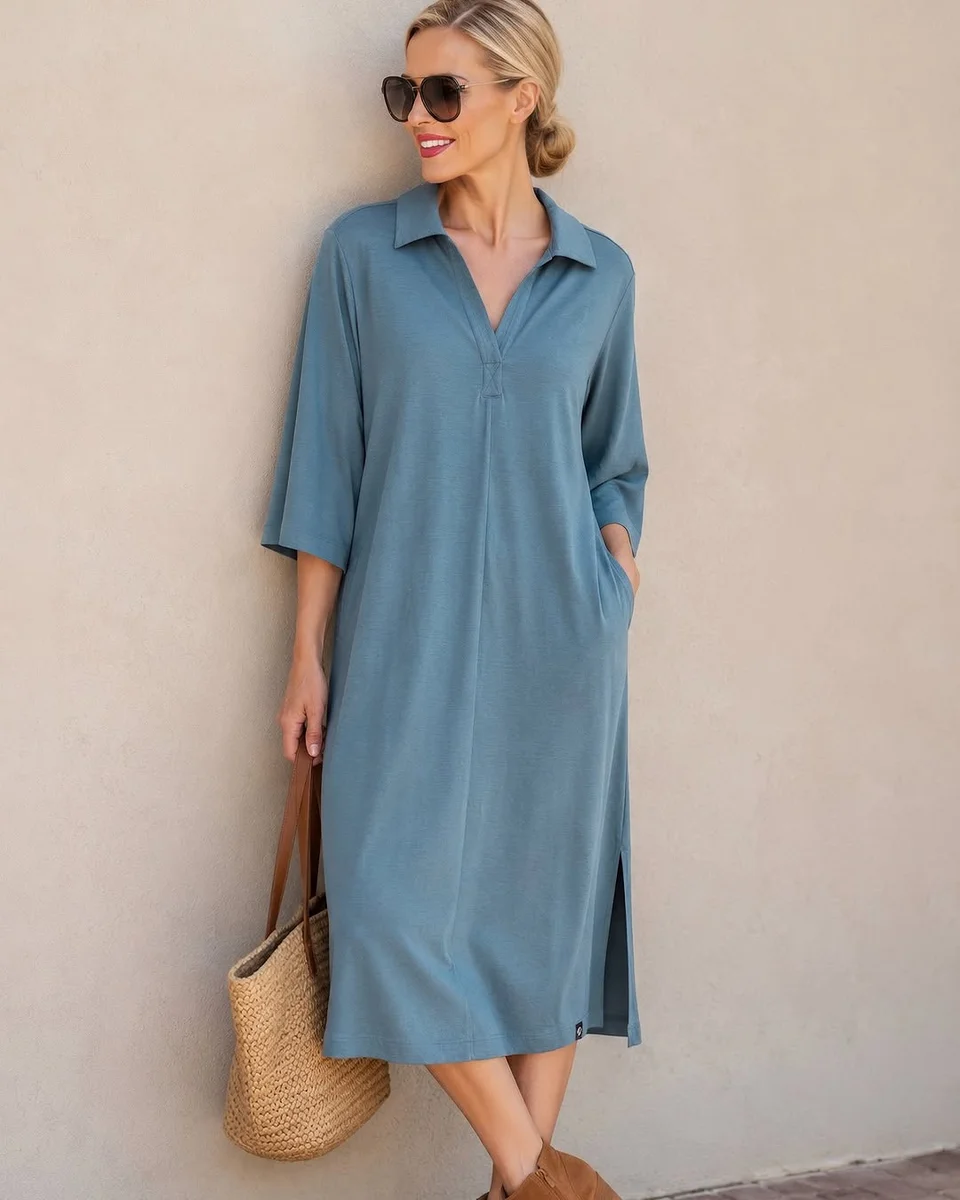
Relaxed shapes need help on a petite frame. This blue polo-collar knit midi hangs straight with elbow sleeves, and the side slit is what saves it.
The slit breaks the straight line and shows leg as you walk, which keeps a loose midi from reading shapeless. Brown ankle boots and a straw tote lean into the casual ease. A straight midi with no slit, no waist, and no leg showing is the one to avoid.
14. White Midi, Dark Flats, and the Ankle Rule
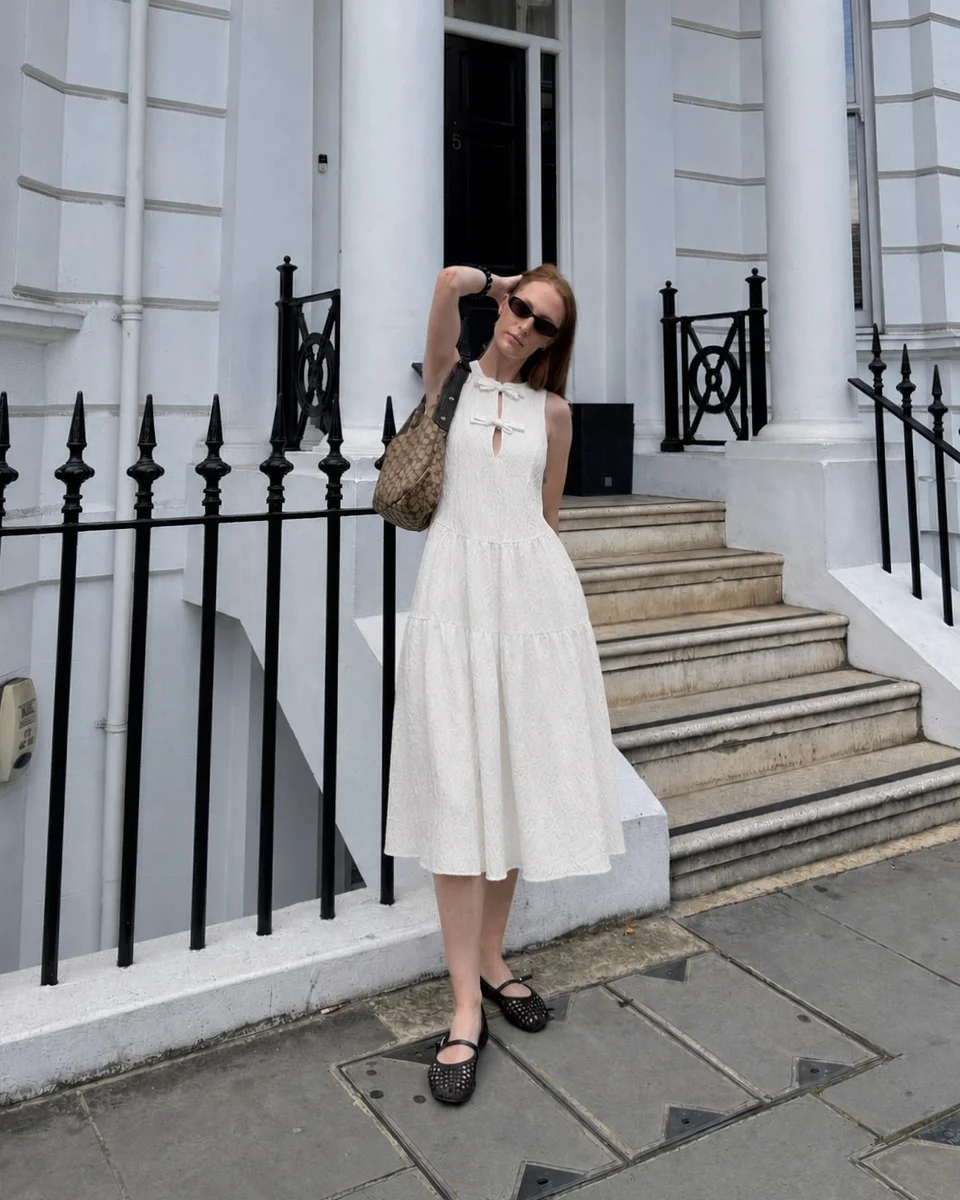
White shows everything, including a bad hem. This tiered white midi with a bow keyhole neckline ends at mid-calf, and the black studded flats work because the ankle stays fully visible.
The rule for light dresses with dark shoes: the hem must sit high enough that the contrast reads as intentional. A tiered skirt adds volume, so keeping the leg line open below it balances the shape.
15. Contrast Piping: Handle With Care
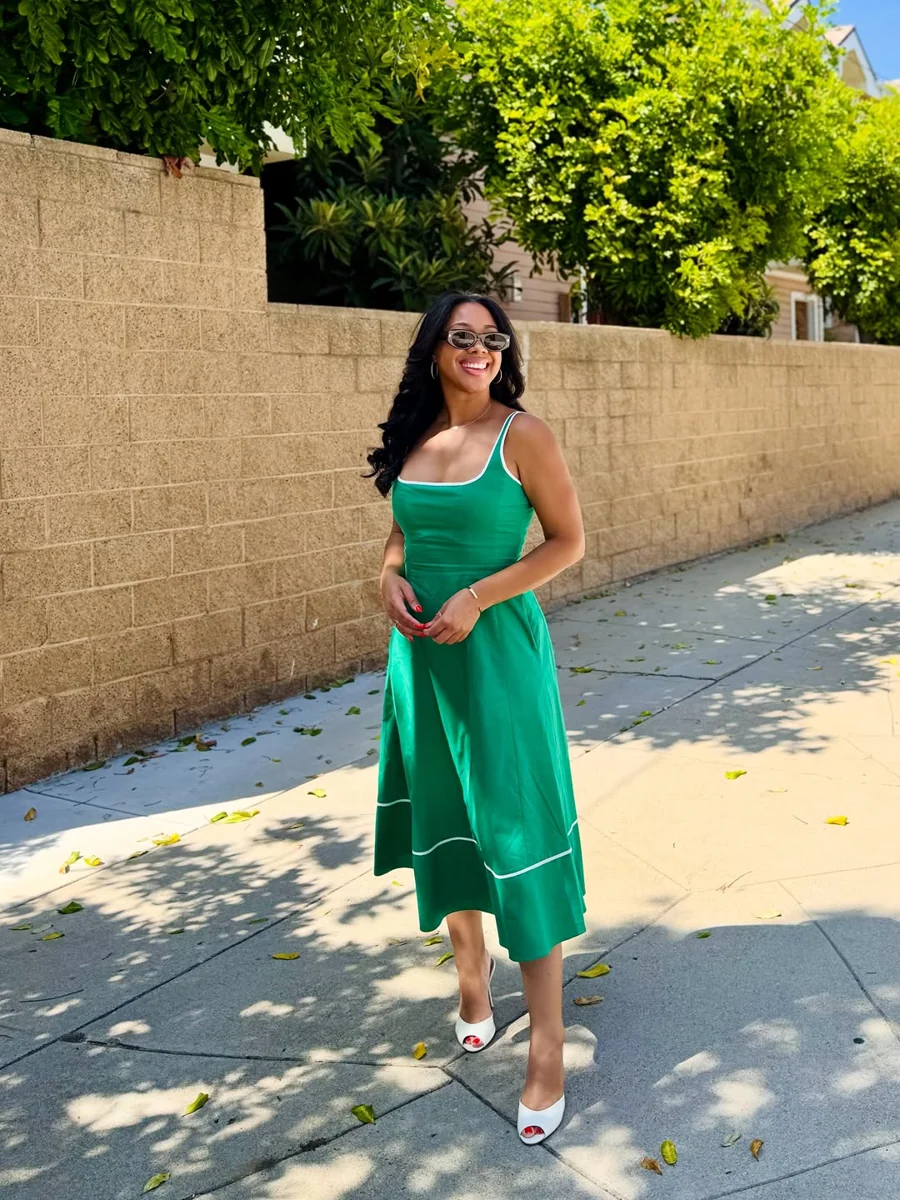
Piping draws a line wherever it sits, and lines cut. This green sleeveless midi edges its neckline and hem in white, which creates horizontal bands at the top and bottom of the dress.
The fix is proportion. The piping stays thin, the hem sits below the knee rather than at mid-calf, and white peep-toe heels extend the leg past the white hem band. Thick contrasting hems at mid-calf are the version to skip.
Keep contrast trim thin. A narrow line accents, a wide band cuts.
Place the hem below the knee when the trim contrasts.
Match shoes to the trim or your skin to continue the line.
16. The Slip Midi: Keep It Fitted, Not Floaty
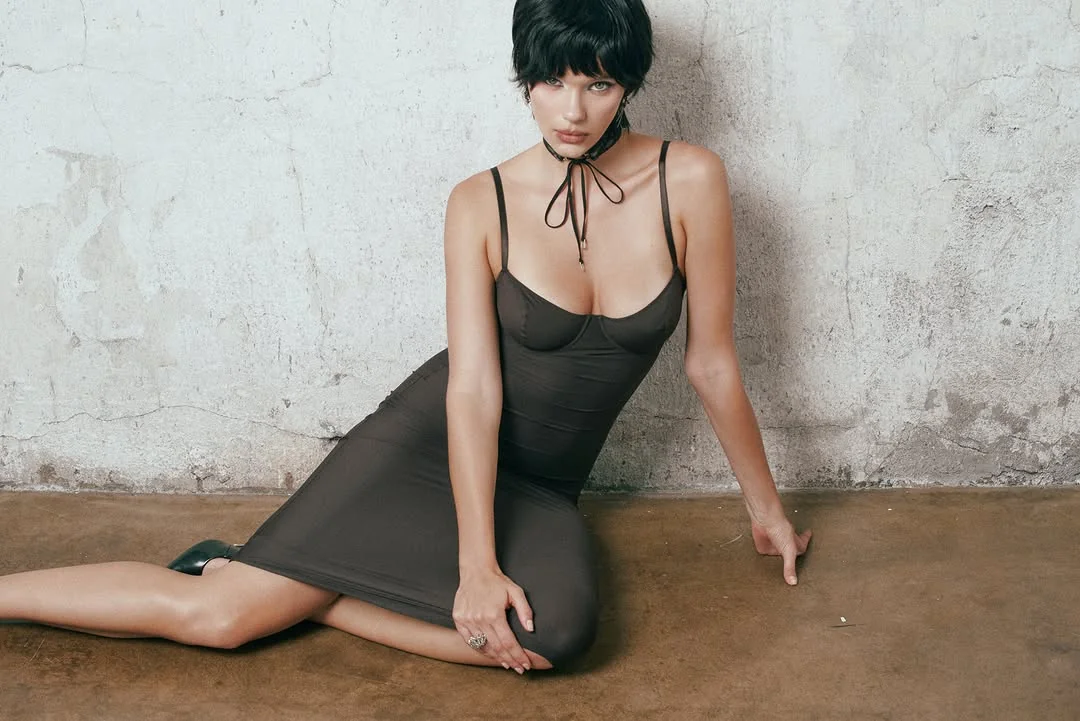
Slips can drown a petite frame when they hang loose. This dark fitted slip midi with thin straps and a draped neckline stays close to the body, and that closeness is the rule.
A fitted slip reads as one sleek line. The choker-style tie adds interest at the neck, where the eye should go, and the hem lands at mid-calf. If a slip billows, belt it or size down. Floaty and petite rarely mix.
Keep the slip fitted through the waist and hip.
Add interest at the neckline, not the hem.
A billowy slip with no waist definition.
Heavy shoes that anchor the light fabric.
17. When the Dress Is the Statement, Simplify Everything Else
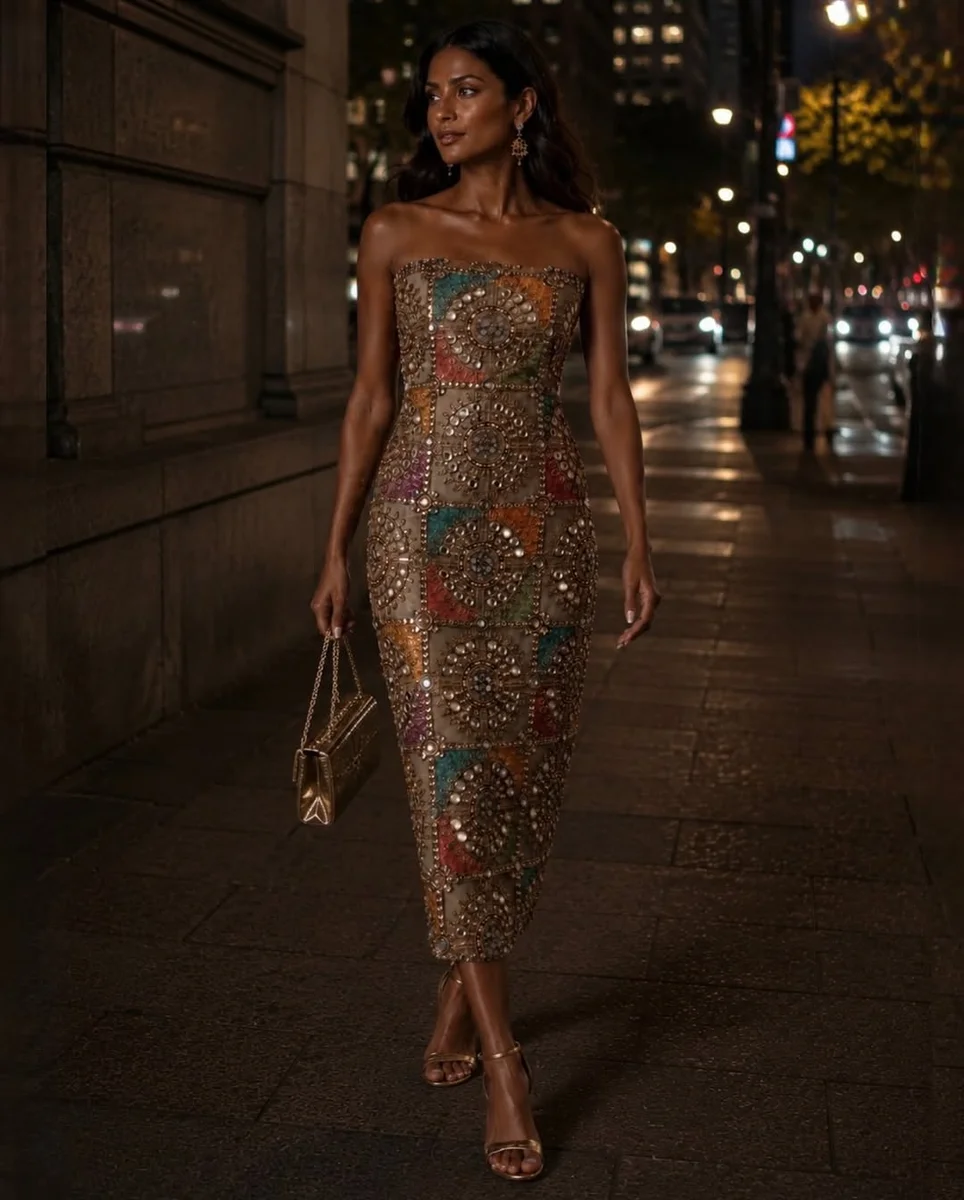
Beading this heavy needs a simple shape underneath. This strapless midi runs straight from bust to below the knee, and the mosaic of gold, jewel-toned patches does all the talking.
The styling rule for statement midis: monochrome accessories only. A gold chain bag and gold strappy heels echo the dress without adding new colors. Let one loud piece have the whole stage.
| Statement midi | Everything else |
|---|---|
| Heavy beading and mixed jewel tones. | One metal tone, repeated in bag and shoes. |
| Straight sheath shape, no extra volume. | Hair simple, jewelry minimal or none. |
18. Pleats: Choose Fine Over Wide
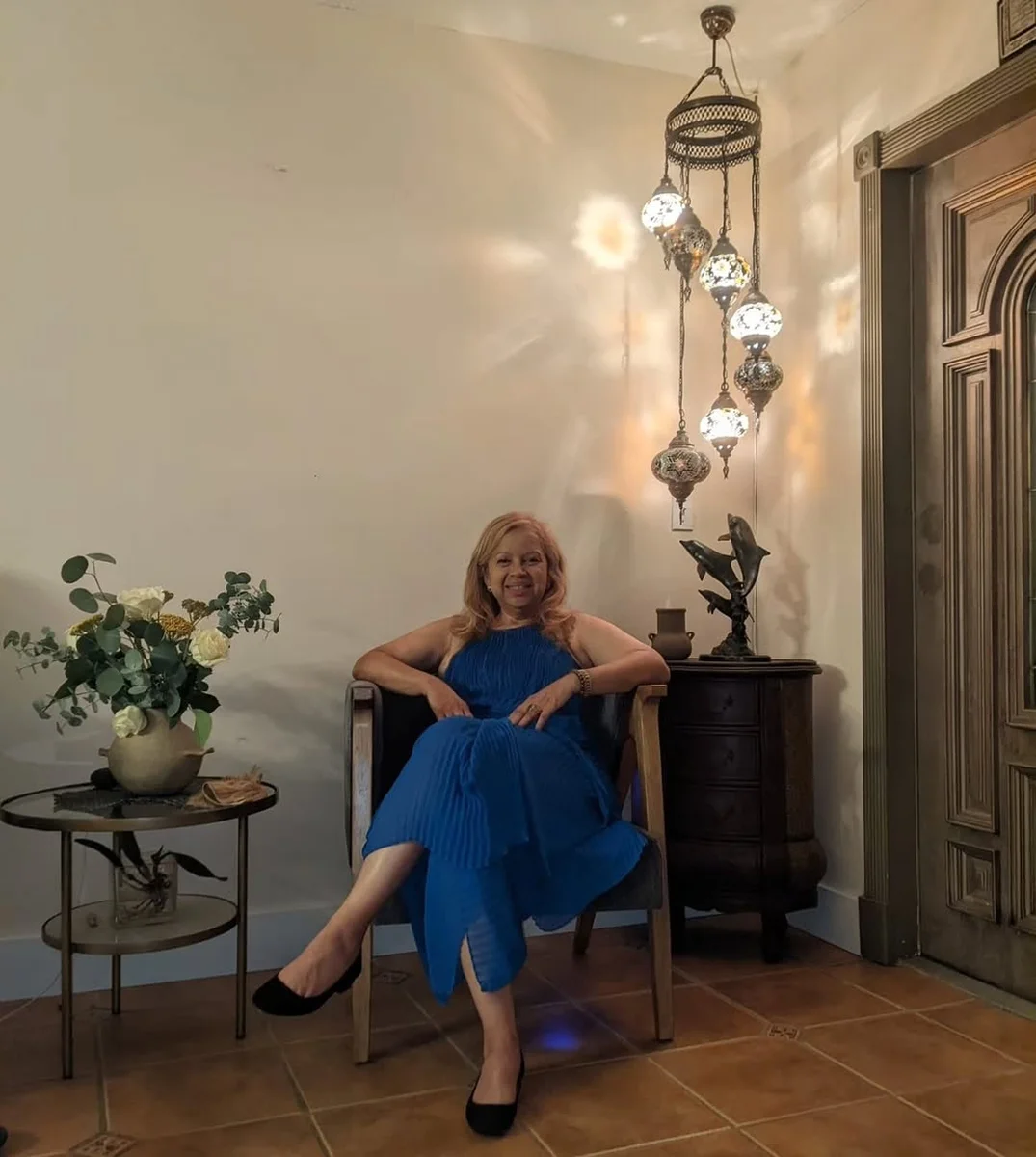
Pleats add volume, so the width of the pleat matters. This bright blue sleeveless midi uses fine, narrow pleats that move softly instead of standing away from the body.
Wide box pleats can add visual width a petite frame does not need. Fine pleats give movement without bulk, and the sleeveless cut with a defined waist keeps the top clean. Black flats work here because the hem sits at a leg-flattering midi length.
Wide stiff pleats stand away from the body and add visual width.
Fine soft pleats move with you and add zero bulk to the silhouette.
19. The Belted Midi Dress Every Petite Wardrobe Needs
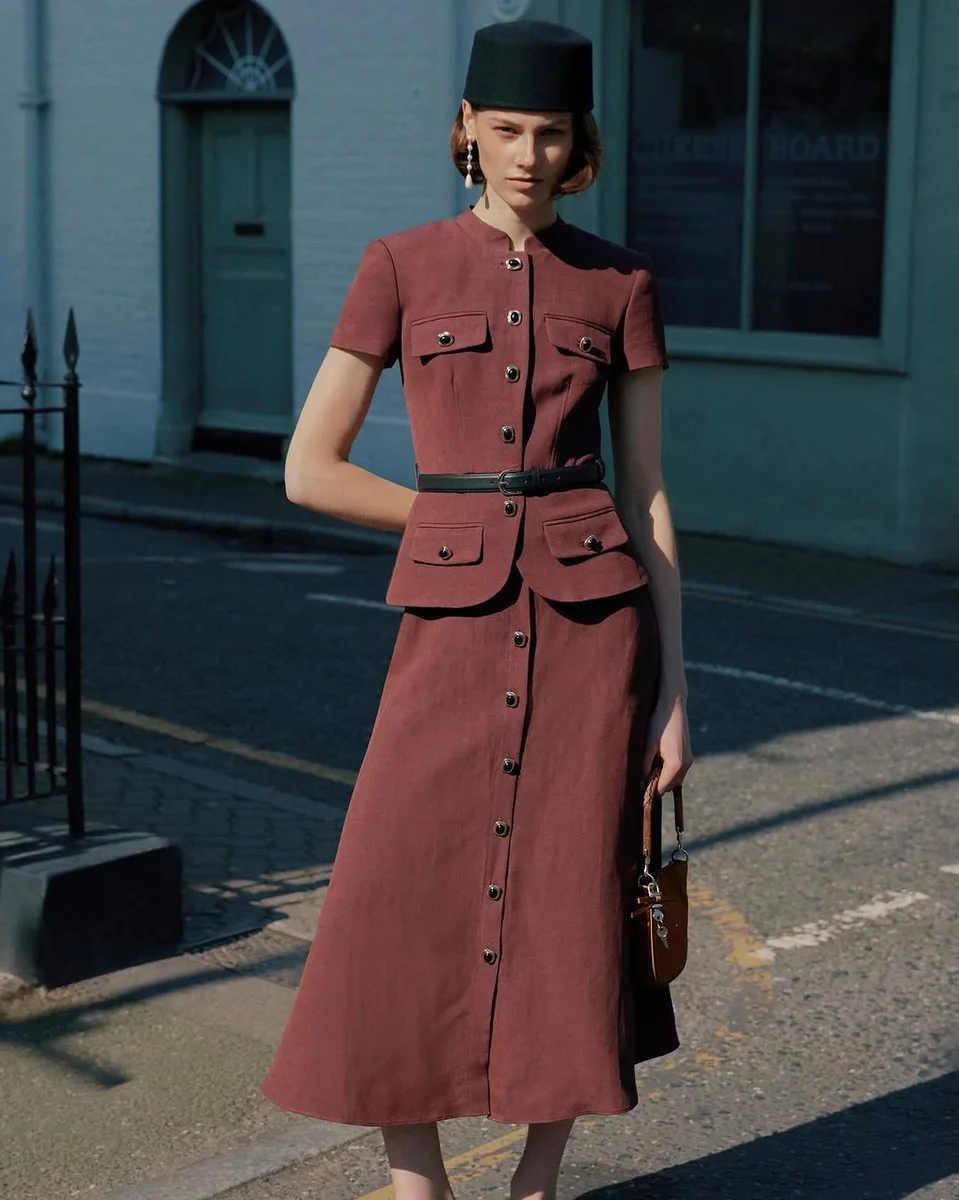
Nothing defines a midi waist faster than a belt. This rust button-front midi with a mandarin collar gets a slim black belt at the natural waist, and the whole dress snaps into proportion.
The button front adds a vertical line down the center, the chest pockets stay small, and the pillbox hat keeps the vintage mood. For summer versions of belted shapes, see summer dresses for petite women.
QUICK TIP
Belt at your natural waist, not where the dress suggests. On many midis the sewn-in waist sits low for petites, and a belt corrects it in seconds.
20. Vertical Panels That Stretch the Eye
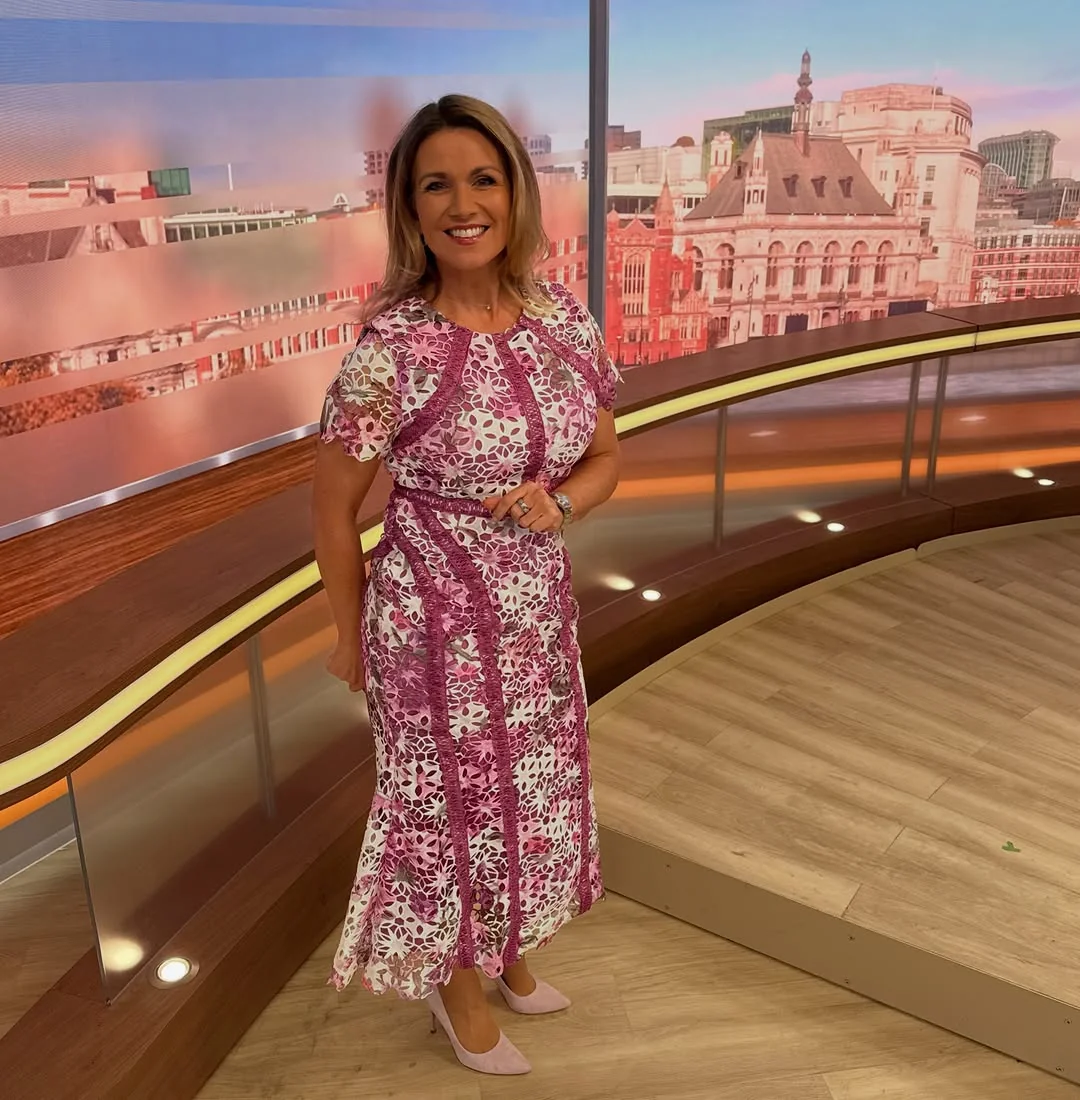
End with the oldest trick in the book, done in lace. This pink floral lace midi runs darker vertical panels from shoulder to hem, and each panel pulls the eye straight down.
Vertical detailing beats horizontal every time on a shorter frame. The short sleeves keep the top light, and pale pink heels match the dress so the leg line continues uninterrupted to the ground.
WHY THIS WORKS
Vertical lines, whether seams, panels, or buttons, tell the eye to travel down, which reads as height.
Conclusion on How to Wear a Midi Dress When You’re Petite
Twenty rules, one takeaway: the midi rewards intention. A hem placed on purpose, a waist defined on purpose, shoes chosen on purpose. That is the whole difference between a midi that wears you and one that works as hard as you do.
If your search for a midi dress petite enough to fit continues, save this guide to your style board on Pinterest. Next time a midi catches your eye, run the five decisions before you buy, and thank yourself later.